7 Signs You Need Crawlspace Encapsulation in Richmond
Locally based crawl space specialists serving the Richmond metro since 2019.
- Licensed & Insured in Virginia
- Locally Owned, Richmond-Based
- 25-Year Warranty on Encapsulation
- Free On-Site Estimates
- 0% Financing Available
Crawl space problems in the Richmond metro almost never announce themselves with a single dramatic symptom. They build slowly through the summer humidity months, accumulate damage over years, and become obvious only after they’re expensive. The good news is the early warning signs are consistent — if you know what to look for, you can catch a crawlspace problem early rather than late. Here are the seven most common signs we see during inspection visits across Henrico, Chesterfield, Glen Allen, Midlothian, Mechanicsville, Bon Air, Tuckahoe, and Short Pump.
1. Musty Smells Upstairs
The most consistent first warning. The smell hits you when you come home, particularly in late summer (July through September), and is strongest in closets, back hallways, and rooms above an unconditioned section of crawlspace. The cause is microbial volatile organic compounds (mVOCs) — chemicals produced by mold and bacteria growing on damp wood in your crawlspace — migrating up through the stack effect. Air fresheners and deodorizers cover the symptom; only addressing the moisture source eliminates the cause.
2. Cold Floors in Winter, Hot Cooling Bills in Summer
If your floors run 5-15°F colder than the rest of the house in January and your power bill spikes 20-30% above neighbors with similar-sized homes in August, your crawlspace is bleeding conditioned air. An unsealed, unconditioned crawlspace acts as a thermal short circuit between your floor joists and outdoor temperatures. Encapsulation plus rim-joist sealing typically drops cooling bills 15-20% and brings floor temperatures within 5-10°F of the upstairs.
3. Bouncy or Sagging Floors
You feel it when you walk across a particular room, or you notice a piece of furniture rocking that didn’t before. The cause is usually CMU pier supports that have settled into Virginia red Piedmont clay over decades, or floor joists that have been compromised by long-term moisture. The fix is adjustable steel Smart Jack supports on properly sized concrete footings — usually completed in 1-3 days, with the floor incrementally re-leveled over a 7-14 day adjustment period.
4. Visible Mold on Floor Joists
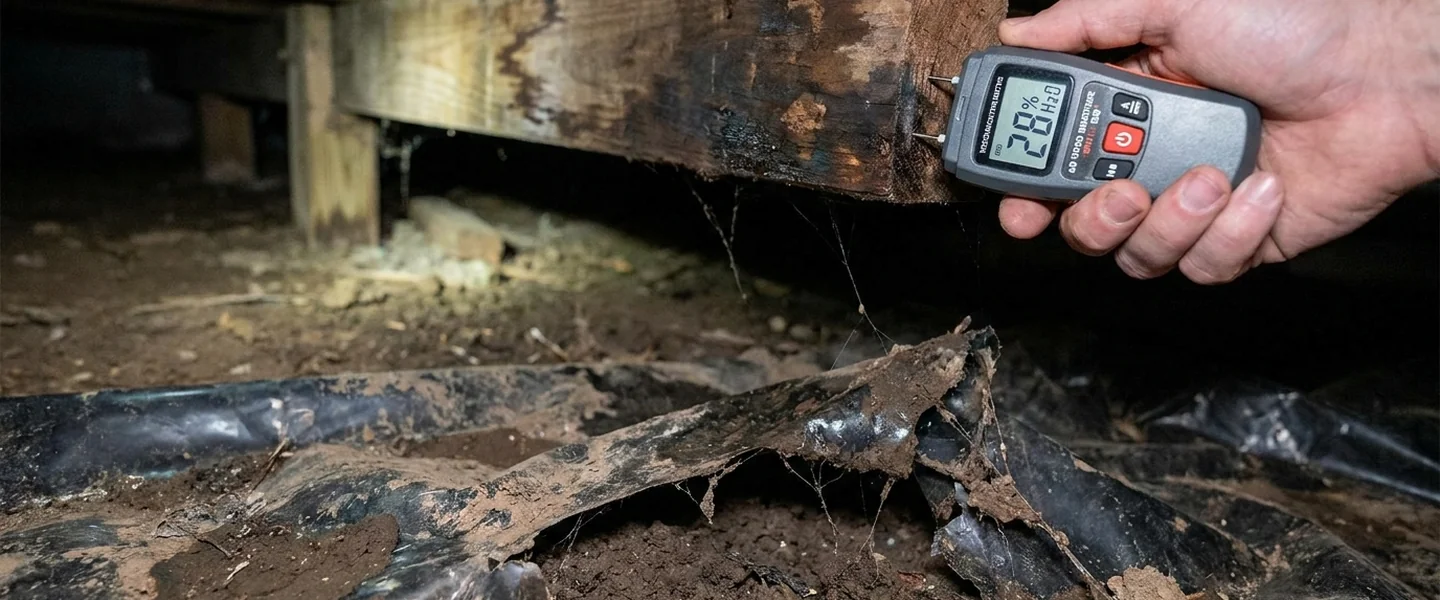
Most homeowners discover this during a pre-listing home inspection or when they go down to investigate a smell. The mold is usually black or gray-green on the joists, beams, and sub-flooring. The home inspector flags it, the buyer’s insurance asks for remediation, and you suddenly need an EPA-registered remediation crew with HEPA containment. The catch: remediation without addressing the moisture source is a 12-month fix at best. We always pair remediation with the moisture fix so it doesn’t return.
5. Standing Water or Mud in the Crawlspace
If you have to step around puddles to get to the back of the crawlspace, the problem is bulk water entry — not just humidity. Common causes in Richmond are clogged gutters dumping water against the foundation, downspouts terminating too close to the home, grade sloping toward the house, broken sump pumps, and (in Glen Allen and Mechanicsville especially) a James River basin water table that pushes up against the crawlspace soil after heavy rain. All of this needs to be fixed before encapsulation. Encapsulating over an active water entry is a recipe for a failed install.
6. Sagging Insulation Hanging from Floor Joists
Fiberglass batts that have absorbed years of crawlspace humidity get heavy, sag out of contact with the sub-floor, and stop providing R-value. They also become rodent habitat — mice and roof rats love the warm, dry-looking fiberglass for nesting. The fix is to remove the fiberglass entirely and replace it with R-10 rigid foam board on the foundation walls, paired with closed-cell spray foam at the rim joists.
7. Allergy Symptoms That Get Worse in the House
This one is subtle but important. If anyone in the household has allergies, asthma, or respiratory sensitivities that get worse at home and improve when they travel, your crawlspace is a likely culprit. The stack effect pulls mold spores, dust mite allergens, and mVOCs from the crawlspace directly into your breathing air. Encapsulation plus a dehumidifier measurably improves indoor air quality, and we’ve had Richmond-area clients report symptom improvement within 1-2 weeks of the install.
Why These Signs Are More Common in Richmond
Central Virginia’s combination of summer humidity (averaging 75% from May through September), red Piedmont clay that retains and releases soil moisture, the highest termite pressure in the country (TIP Zone 1), and a housing stock that includes thousands of 1920s-1950s homes with original raised-pier crawlspaces in the Fan District, the Museum District, Church Hill, Carytown, and Tuckahoe, makes the Richmond metro one of the worst climates in the U.S. for an unsealed crawlspace. The signs above will appear faster and accumulate worse here than they would in a drier climate. The flip side: encapsulation plus a dehumidifier produces a more dramatic improvement here than it would in a drier climate.
Bottom Line
If you recognize one of these seven signs in your Richmond-area home, schedule a free inspection. Catching the problem early is dramatically cheaper than waiting until structural damage compounds. Call (804) 979-2406 for a free 30-minute on-site inspection with a written, itemized estimate delivered within 24 hours.
Questions to Ask the Contractor When You Schedule
- Does the same technician do the inspection and the install?
- What materials do you use and are they specified by brand and model in the quote?
- Is the workmanship warranty transferable to a new homeowner?
- Do you address drainage and water entry before encapsulation?
- Will you provide a written second opinion on another company’s quote, free of charge?
- Can you provide local references from Richmond-area jobs in the past 12 months?
Common Misconceptions About Crawlspace Warning Signs
“If I can’t see it, it’s not a problem.”
Most crawlspace damage develops out of sight. By the time you can see the problem from the outside (visible mold on lower-floor trim, sagging baseboards, doors that won’t close), the crawlspace has been deteriorating for years.
“A musty smell just means I need air freshener.”
The smell is a chemical signal of microbial activity. Covering it doesn’t address the underlying mold and bacteria that produced it, and those organisms continue to release allergens and spores into your breathing air whether you can smell them or not.
“Cold floors are normal in old houses.”
They are common in old houses but they are not a structural necessity. Encapsulation plus a sealed thermal envelope brings the floor temperatures of a 1920s Museum District Tudor within a few degrees of a modern Short Pump tract home.
Service Areas We Cover
We serve Richmond and the entire metro area. Click your suburb for local details and our typical findings in your housing stock:
Free Crawlspace Inspection in Richmond
Same-week appointments. No high-pressure sales. Serving Richmond and surrounding areas including Henrico, Chesterfield, Glen Allen, Midlothian, Mechanicsville, Bon Air, Tuckahoe, Short Pump.